State Farm has been a household name for generations, and it earned that status by doing two things well: building a vast agent network and paying a lot of everyday claims. If you are comparing policies or trying to decode your renewal, it helps to know where State Farm shines, where it is average, and how to use its system to your advantage. This guide walks through coverage, cost drivers, discounts, and the claims process with practical detail, so you can avoid surprises and buy the right protection for your situation.
What “State Farm insurance” really means
People use the phrase State Farm insurance to cover a wide set of policies: auto, home, renters, condo, life, business, and specialty lines like umbrella, motorcycles, and boats. In practice, most families start with car insurance or home insurance, then bundle other lines for convenience and discount. That bundle is central to how State Farm competes. The company prices aggressively for multi-policy households, then supports that bundle with local service through a State Farm agent.
A quick note on structure: the company relies on a massive network of exclusive agents who sell and service policies. You can buy online or through the app, but your policy is still anchored by a local or regional office. That matters when you need a State Farm quote tailored to unusual situations or when a claim gets complicated and you want a human who knows your file.
Car insurance with State Farm: coverages that matter
Every auto policy has core protection required by law and optional add-ons that change the experience when something goes wrong. State Farm’s menu looks familiar, but there are a few nuances worth noting.
Liability is the foundation. Most states require it, and the numbers on your declarations page show split limits for bodily injury per person, bodily injury per accident, and property damage. An example might be 100/300/100, which means up to 100,000 per person, 300,000 per accident for injuries you cause, and 100,000 for other people’s property. Many drivers still carry 25/50/25 or 50/100/50 because it is cheaper, but one moderate crash can eat those limits quickly. If you own a home, have savings, or simply do not want your wages garnished after a lawsuit, higher limits are a modest price for real protection. State Farm typically prices 100/300/100 or 250/500/250 competitively, especially when paired with umbrella coverage.
Collision and comprehensive are the next layer. Collision fixes your car after a crash you cause or when fault is unclear. Comprehensive handles non-crash losses like hail, theft, fire, flood, and even deer strikes. Deductibles commonly range from 250 to 1,000. The difference in premium between a 500 and 1,000 deductible is often 8 to 15 percent, though it varies by state and vehicle. If you can comfortably pay a 1,000 repair bill in a pinch, taking the higher deductible usually pencils out over a few claim-free years.
Uninsured and underinsured motorist coverage deserves attention. In some states, as many as 1 in 6 drivers have no insurance. If someone hits you and cannot cover your injuries, this protection steps in. It is inexpensive relative to the risk it covers, and State Farm will usually mirror your liability limits here if you ask. Many claim disputes I have seen would have been non-events if the injured driver had matched UM/UIM to their liability.
Medical payments or personal injury protection, roadside assistance, rental car reimbursement, rideshare endorsements, and specialty add-ons fill in the edges. Roadside is cheap peace of mind for families with teen drivers or older vehicles. Rental reimbursement helps after a covered loss if you rely on one car to get to work. If you drive for Uber or Lyft, make sure your policy includes the endorsement that closes gaps when the app is on but you have not accepted a ride. That gap is where most rideshare claims stall.
Two State Farm specific notes. First, the Drive Safe & Save telematics program tracks driving behavior through a mobile app or connected car data. Safe drivers can see decent discounts, often 10 to 30 percent after a few months of clean data, but aggressive braking or frequent late-night trips can trim the savings. Second, accident forgiveness - available in many states - can soften the blow of a first at-fault accident if you have a clean history. It does not erase a surcharge forever, but it can keep your premium from spiking right away.
Home insurance with State Farm: beyond the dwelling number
Home policies look deceptively simple because the top line is a big dwelling number. That figure is the cost to rebuild, not the market value of your home. Getting that number right is the single most important factor for claims. State Farm uses replacement cost estimators that factor in local labor and materials. If you remodeled a kitchen or added a deck, tell your State Farm agent so the rebuild cost reflects those changes. Undervaluation is common, and it leads to partial payouts that do not rebuild what you lost.
Standard coverages include the dwelling, other structures like fences and sheds, personal property, loss of use if you have to live elsewhere during repairs, personal liability, and medical payments to others. The tricky parts live in the sublimits and endorsements.
Personal property often pays at actual cash value by default unless you add replacement cost. With replacement cost, your ten-year-old sofa is not valued as a thrift store item, it is replaced with a new equivalent, subject to policy terms. Jewelry, firearms, fine art, and collectibles have low default limits - a common figure is 1,500 for jewelry theft. If you own a few nice pieces, schedule them individually with appraisals. A 10,000 ring might only cost 100 to 150 per year to schedule, and it gets broader coverage, including mysterious disappearance.
Water is the other landmine. Sudden pipe bursts are usually covered, but gradual seepage is not, and sewer or drain backup requires an endorsement. In many Midwest and coastal markets, I add 10,000 to 25,000 of water backup to most homes, more if the basement is finished. Flood is excluded from standard home insurance. You need a separate flood policy, federal or private, if water can rise into your home from outside. Ask bluntly about water perils, and get the answers in writing.
Ordinance or law coverage pays for code upgrades after a loss. If a fire uncovers outdated wiring or a roof needs new underlayment to meet current code, the city will require the upgrade and it can run five figures. Bumping this coverage from a default 10 percent to 25 percent is usually inexpensive and has saved more than one client from a budget hole mid-rebuild.
Finally, liability on home policies is often the cheapest protection you can buy. A dog bite, a fall on your steps, or your kid’s errant baseball can lead to an expensive claim. Many people carry 100,000. I rarely recommend less than 300,000, and most homeowners are better served with 500,000 on the home and a 1 to 2 million umbrella over both home and auto.
How pricing works: the hidden levers behind your rate
Rates are not pulled from thin air. For auto, your driving record, age, vehicle type, garaging address, annual mileage, and years of prior insurance set the baseline. Credit-based insurance scores, where allowed by state law, have a large effect. A driver with no tickets and excellent credit in a low-theft suburb might pay 90 to 110 per month for full coverage on a typical sedan, while a similar driver in a dense city with higher claim frequency can see 160 to 220. A couple with newer SUVs and a teen on the policy can easily reach 300 to 500 per month before discounts. The spread is wide because loss data is local and current, and every company prices it differently.
For home insurance, location and construction dominate. Roof age and type, proximity to fire hydrants, fire department rating, local building costs, and catastrophe models for wind, hail, wildfire, or convective storms all feed the algorithm. In recent years, materials inflation pushed many homeowners’ premiums up 10 to 25 percent in a single renewal, even without claims. If you see a big jump, ask your agent to walk you through the dwelling replacement model. Sometimes a tweak - correcting square footage, roof age, or siding type - trims a surprising amount.
Bundling matters. State Farm leans on multi-policy discounts, and they stack with others like safe driver, accident-free, multiple vehicles, anti-theft, and certain professional or affinity groups. The difference between a standalone auto policy and a bundled home and auto package can be 10 to 25 percent in many markets. If you are moving all lines, time the switch so no policy is stranded out of sync. Lining up renewal dates gives you more leverage to shop in the future.
Getting a State Farm quote that actually reflects your life
You can grab a quick online State Farm quote in under ten minutes. That is a good way to ballpark. If you want a number you can rely on, have a few details ready and consider looping in a State Farm agent for the final pass.
- Driver license numbers, VINs, annual mileage estimates, and any tickets or accidents in the past five years The coverage you carry now, with limits and deductibles, plus any special endorsements like rideshare or custom equipment For home, the year built, roof age and material, plumbing and electrical updates, and any finished basement or additions Security systems, water shutoff devices, or mitigation features that may earn discounts Any high-value personal items you would schedule, with appraisals or receipts
If you prefer face-to-face service or you want help unraveling a multi-line, multi-driver household, search for an Insurance agency near me and interview two or three offices. You are not just buying a company. You are picking a team that will return calls during a messy week. Ask how they handle claims support, how many staff handle service tickets, and how they monitor rate changes at renewal.
Working with a State Farm agent vs going completely digital
The digital tools are good. The app lets you manage ID cards, file simple claims, and adjust payments. For simple policies with stable needs, that can be enough. An experienced State Farm agent earns their keep when your life gets complicated.
A few examples from the field. A family added a teen who would drive a shared vehicle. Their initial quote spiked more than expected. The agent re-tiered the youthful driver to an older sedan with lower symbol ratings, documented the teen as an occasional operator on the newer SUV, and added a driver training discount. The final premium landed about 18 percent lower than the first pass, with the same liability limits.
Another case: a homeowner finished a basement with a new bath, then got a water backup claim denied under a previous carrier. When moving to State Farm, the agent increased water backup to 25,000, bumped ordinance or law to 25 percent, and scheduled a few guitars. The premium went up modestly, but when a valve failed two years later, the claim was handled within the limits they had planned for.
Local agents also know the underwriting quirks hiding behind the website. Some coastal ZIP codes require higher wind deductibles or separate wind policies. Some wildfire corridors call for defensible space or roof changes before a carrier will write new business. An agent can tell you the difference between a hard no and a conditional yes.
Claims, from fender benders to kitchen fires
A claim is where the policy becomes more than paper. The steps are straightforward, but the details determine whether you spend two hours or two months chasing your tail.
- Make the scene safe, document with your phone, and report promptly through the app or your agent. For auto accidents, capture the other driver’s insurance, plate, and photos of all vehicles. For property losses, do emergency mitigation like shutting off water and tarping a roof to prevent further damage. Keep receipts and estimates organized. For auto, body shops often work directly with State Farm’s system. For home, you may have a field adjuster visit or a virtual estimate using photos and contractor bids. Ask how your deductible applies and whether the claim will affect a surcharge. If the repair cost will fall near your deductible, it may be wiser to self-pay to keep your loss history clean. For liability claims, do not admit fault. Provide facts. Your adjuster and, if needed, defense counsel will handle statements and negotiation. If something feels stuck, loop in your agent. A good office cannot overrule an adjuster, but they can escalate, translate policy logic, and help you avoid unforced errors that slow payment.
Two practical notes. First, rental car reimbursement has daily and total caps, commonly 30 to 50 per day and 900 to 1,500 per claim. Body shops are busy, and parts delays are common. If the cap is low and you would struggle without a car, consider increasing that limit now, not after a crash. Second, depreciation on personal property is real unless you carry replacement cost and provide documentation. Keep a simple household inventory in cloud storage with a few photos per room. It makes a tedious process much easier.
Edge cases that trip people up
Moving states can scramble your price. A clean Illinois policy might jump in Colorado or Florida due to very different loss patterns. Do not assume loyalty credits travel. Ask your agent to quote the new address 30 to 60 days before you move. You may need to retitle vehicles and adjust coverages to meet new state minimums.
Comprehensive-only coverage on a parked vehicle looks like a good way to save money during a long trip, but it introduces gaps. If someone borrows the car and crashes, you have no liability or collision. If the finance company State farm agent statefarm.com requires full coverage, you could violate your loan terms. Get written confirmation of what is and is not covered.
If you rent out part of your home, a standard homeowners policy usually excludes business activity. Occasional short-term rental can sometimes be endorsed, but regular Airbnb use often pushes you into landlord or commercial territory. Do not rely on the platform’s host guarantee to replace proper insurance. It is not the same.
Teen drivers blow up budgets if you let the system assign them to the most expensive car by default. Provide clear vehicle assignments, consider driver training, ask about good student discounts, and revisit the assignments whenever you replace a car.
After a hailstorm or major loss event, you will hear from contractors before you hear from your adjuster. Knock-and-sign agreements often include assignment of benefits that give the contractor control of your claim. Read before you sign. Your State Farm agent can point you to reputable local vendors, or you can use the carrier’s preferred network without losing the right to choose your own.
Umbrella coverage and why it pairs well with State Farm
Umbrella insurance sits on top of your auto and home liability, adding 1 to 5 million of protection for a relatively low price, often 150 to 350 per year for the first million if you meet eligibility and carry required underlying limits. If you host carpools, have a swimming pool, own rental property, or have teenage drivers, an umbrella is cheap sanity. State Farm typically requires at least 250/500 auto liability and 300,000 home liability to write an umbrella. When you bundle all three - auto, home, umbrella - the underwriting stays aligned and claims coordination is easier.
How to think about deductibles and limits like a pro
Set your auto and home deductibles at a level that fits your cash cushion, then push liability limits as high as your budget allows. Small claims are where insurance is least efficient. Frequent small claims can trigger surcharges or nonrenewals across the industry, not just with State Farm. Use the policy to protect against losses you cannot absorb.
A concrete example. A household with two cars, a mortgage, and a combined income of 150,000 carries 50/100/50 on auto and 100,000 on home liability with 500 deductibles everywhere. They are paying good money to be underinsured for their profile. Moving to 250/500/250 on auto, 500,000 on home, and adding a 1 million umbrella might add 20 to 40 per month net after adjusting deductibles to 1,000. That trade swaps nickel-and-dime protection for real asset protection.
When to shop, when to stay
Insurance is a long game. Staying put for five to seven years without claims can unlock the best pricing tiers, and a known service team saves time when you need help. But markets shift. If your renewal jumps more than 15 to 20 percent without a clear reason, ask for a coverage review, then consider a competitive quote. Bring another carrier’s apples-to-apples proposal back to your State Farm agent. Often they can find a program tweak, a verification you missed, or a discount you can add.
Do not churn for 5 a month if you value service. Do look hard at changes tied to catastrophe modeling or major life events. Marriage, a new driver, a roof replacement, a long commute ending, or a move from city to suburb can alter your risk profile enough to justify a reshuffle.
What a good local insurance agency does for you
If you have ever searched for an Insurance agency near me and wondered why the same logos pop up, remember that not all offices operate the same way. A responsive State Farm agent invests in service staff, returns calls quickly during claims, and runs annual coverage checkups. They do not just send a renewal and hope you pay it. They ask about new drivers, home projects, and changes in use. They explain why hail claims do not affect liability pricing, or why a glass-only claim may be handled differently from a collision loss.
I have sat at kitchen tables after fires and in body shops after crashes. The difference between a smooth claim and a frustrating one often comes down to preparation and communication. A human who knows your file can head off small mistakes, like removing a VIN digit or forgetting to schedule the ring you bought last year.
Practical signals you are getting a solid policy
You should see clear liability limits that match your risk, deductibles you can handle, endorsements that reflect your home’s real exposure, and discounts that are documented, not assumed. Your quote should show how the dwelling number was calculated. Your auto policy should show all drivers and the role each plays.
If your State Farm quote looks surprisingly low, double check two areas: the liability limits and whether replacement cost is on personal property. Cheap can hide gaps. If it looks surprisingly high, look for a recent ticket or at-fault accident you forgot, a youthful driver assigned to the wrong car, or a miskeyed roof age. Fixing those usually does more good than shopping six carriers without context.
Final advice from the trenches
Insurance is a promise that lives in the fine print, activated on a bad day. Make all the big decisions when you are calm. Spend thirty minutes with your State Farm agent to get the structure right, then let automation handle the rest until your life changes. Keep your proof of insurance in your glove box and your phone. Keep a home inventory in the cloud. Ask dumb questions now so you do not have painful surprises later.
If your needs are simple, the app and a quick online State Farm quote may be enough. If your life has moving parts - kids, rentals, side gigs, custom equipment, travel - lean on a seasoned pro. That is the real value of a neighborhood Insurance agency tied into a large carrier: local brains, national backbone.
One last nudge. Review your policies once a year, ideally before renewal. Look at the changes line by line. Rates rise, materials change, kids learn to drive, roofs age. A quiet half hour in spring can save you hours of stress when a tree falls or a bumper crunches. State Farm’s scale and agent network make that process straightforward, but only if you use the tools and ask for help when you need it.
Business Information (NAP)
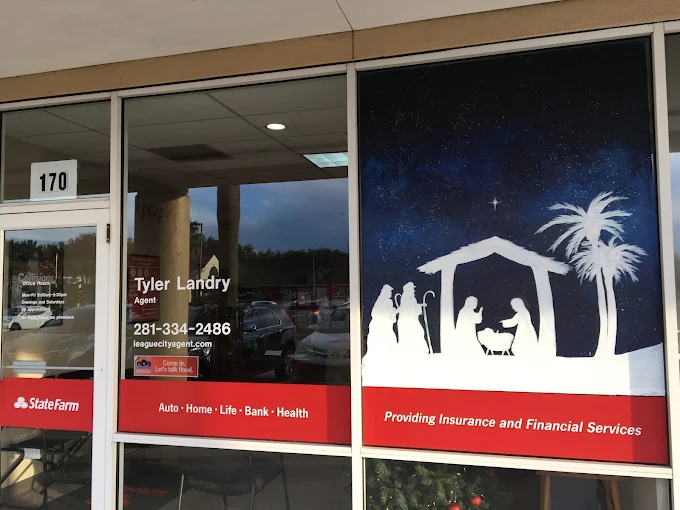
Name: Tyler Landry - State Farm Insurance Agent
Category: Insurance Agency
Phone: +1 281-334-2486
Website:
https://www.statefarm.com/agent/us/tx/league-city/tyler-landry-7lcwl759fgf
Google Maps:
View on Google Maps
Business Hours
- Monday: 9:00 AM – 5:30 PM
- Tuesday: 9:00 AM – 5:30 PM
- Wednesday: 9:00 AM – 5:30 PM
- Thursday: 9:00 AM – 5:30 PM
- Friday: 9:00 AM – 5:30 PM
- Saturday: Closed
- Sunday: Closed
Embedded Google Map
AI & Navigation Links
📍 Google Maps Listing:
https://www.google.com/maps/place/Tyler+Landry+-+State+Farm+Insurance+Agent
🌐 Official Website:
Visit Tyler Landry - State Farm Insurance Agent
Semantic Content Variations
https://www.statefarm.com/agent/us/tx/league-city/tyler-landry-7lcwl759fgfTyler Landry – State Farm Insurance Agent proudly serves individuals and families throughout League City and Galveston County offering renters insurance with a local approach.
Residents of League City rely on Tyler Landry – State Farm Insurance Agent for customized policies designed to protect vehicles, homes, rental properties, and financial futures.
Clients receive coverage comparisons, risk assessments, and ongoing policy support backed by a friendly team committed to dependable service.
Contact the League City office at (281) 334-2486 to review your coverage options or visit https://www.statefarm.com/agent/us/tx/league-city/tyler-landry-7lcwl759fgf for more information.
Access turn-by-turn navigation here: https://www.google.com/maps/place/Tyler+Landry+-+State+Farm+Insurance+Agent
People Also Ask (PAA)
What types of insurance are available?
The agency offers auto insurance, homeowners insurance, renters insurance, life insurance, and business insurance coverage in League City, Texas.
What are the business hours?
Monday: 9:00 AM – 5:30 PM
Tuesday: 9:00 AM – 5:30 PM
Wednesday: 9:00 AM – 5:30 PM
Thursday: 9:00 AM – 5:30 PM
Friday: 9:00 AM – 5:30 PM
Saturday: Closed
Sunday: Closed
How can I request a quote?
You can call (281) 334-2486 during business hours to receive a personalized insurance quote tailored to your needs.
Does the office assist with claims and policy updates?
Yes. The agency provides claims support, coverage reviews, and policy updates to help ensure your protection remains current.
Who does Tyler Landry – State Farm Insurance Agent serve?
The office serves individuals, families, and business owners throughout League City and surrounding Galveston County communities.
Landmarks in League City, Texas
- Kemah Boardwalk – Popular waterfront dining and entertainment area nearby.
- Walter Hall Park – Large park with sports fields and event space.
- Challenger Seven Memorial Park – Community park with historical significance.
- Clear Lake – Major recreational boating and waterfront destination.
- League City Historic District – Area featuring preserved historic homes.
- Baybrook Mall – Regional shopping and dining center.
- Space Center Houston – Nearby NASA visitor center and attraction.